Steelbane: A Gothic Blackletter Font for Bold Design
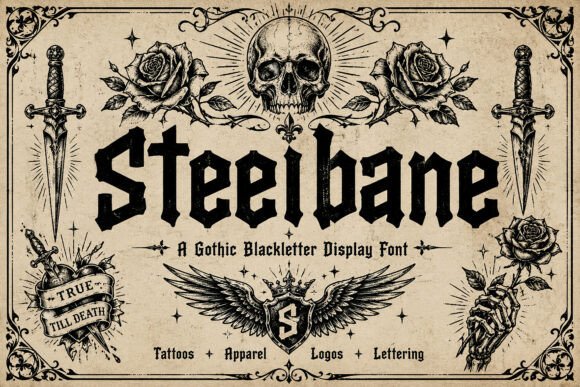
Finding a typeface that carries the weight of history while still feeling relevant in a modern context is a rare discovery. Steelbane is one such creative asset. It’s a Gothic Blackletter Display Font that doesn’t just sit on the page—it commands the space. This isn’t the kind of typeface you use for body text or a corporate memo. It’s a statement piece, designed for moments where a design needs to feel powerful, ancient, and unapologetically bold.
At its core, Steelbane is built on the archaic charm of medieval scripts, but it’s been refined for contemporary use. The strokes are raw and textured, with uniquely radiant edges that catch the eye. The letterforms are pronounced and heavy, creating a visual rhythm that feels both somber and mystically beautiful. It’s the typographic equivalent of wrought iron gates or aged stone—something that feels permanent and substantial.
Visual Strength and Personality
What makes Steelbane stand out in a crowded field of display fonts is its personality. It has a dramatic, almost theatrical quality that makes it perfect for projects needing a strong visual hierarchy. The font draws from the blackletter tradition, characterized by high contrast and sharp, angular strokes. This gives it an inherent intensity. When you set a headline in Steelbane, it doesn’t whisper; it roars.
This typeface is particularly effective for creating a specific mood. It leans into a Gothic aesthetic that can evoke a sense of fantasy, rebellion, or ancient mystery. For designers working on brand identity for a metal band, a fantasy game, or a craft brewery with a medieval theme, Steelbane provides an instant shorthand for that vibe. It’s a creative font that does a lot of the heavy lifting for you, establishing tone before the viewer even reads the words.
Where Steelbane Fits Best: Practical Applications
Knowing when to use a font like this is key. Its strength lies in display use—large, prominent text where its intricate details can shine. Here’s where Steelbane truly excels:
- Logo Design and Branding: For brands that want to project strength, tradition, or a touch of the edgy and esoteric. Think apparel lines, gaming studios, or artisanal product packaging. It creates a memorable mark that stands apart from the clean sans-serifs dominating the market.
- Editorial and Poster Design: Use it for magazine covers, event posters, or book titles, especially in genres like fantasy, horror, or historical fiction. It sets a powerful scene and draws the reader in.
- Digital and Web Design: As a hero font on a landing page or for stylized headers on a gaming blog, it can dramatically increase visual impact. It’s also fantastic for social media graphics that need to stop the scroll.
- Apparel and Merchandise: The bold strokes and sharp edges reproduce well on fabric and merchandise, making it a solid choice for t-shirt designs, album covers, and tattoo flash art.
Making Steelbane Work for Your Project
Integrating a premium font like Steelbane into your work requires a thoughtful approach. It’s a powerful tool, but like any specialized asset, it needs to be used with care to ensure it enhances rather than overwhelms your design.
Evaluating Fit and Readability
First, consider your audience. Steelbane’s medieval roots might not resonate with a tech startup or a minimalist lifestyle brand. Its personality is strong, so ensure it aligns with the message you want to send. The font’s intense letterforms are designed for impact at larger sizes. Attempting to use it for short paragraphs or small text will compromise legibility. Its job is to be a visual anchor, not a workhorse for long-form reading.
Mastering Font Pairing
A critical skill with any display font is pairing it correctly. Because Steelbane is so stylistically distinct, it needs a partner that complements without competing. A clean, geometric sans-serif font can provide excellent contrast, allowing the Gothic headlines to shine while ensuring secondary text remains highly readable. A simple serif font with a humanist touch can also work, creating a bridge between the archaic and the traditional. Avoid pairing it with other ornate script fonts or handwritten fonts, as this will create visual chaos.
Technical Considerations: Styles and Licensing
Before purchasing, review the font’s full character set. Steelbane includes uppercase and lowercase letters, numbers, and punctuation, all in its signature style. Check if it includes stylistic alternates or ligatures that might offer more creative flexibility. Equally important is understanding the commercial license. Ensure the license covers your intended use, whether it’s for a single client project, unlimited commercial work, or embedding in a digital product. This is a standard but crucial step when investing in any design asset.
Ultimately, Steelbane is more than just a collection of glyphs. It’s a design asset that carries a specific energy. Used thoughtfully, it can elevate a project from ordinary to legendary, infusing it with a powerful, timeless, and striking personality that genuinely commands attention. It’s a typeface for designers and creators who aren’t afraid to make a bold statement.