The Timeless Authority of Illuminated Initials
In the fast-paced world of modern typography, where clean sans serif font families and sleek geometric shapes dominate, there is a growing counter-movement. Designers are returning to roots, seeking typefaces that offer weight, history, and narrative. We are seeing a resurgence of texture in branding and packaging, where the sterile perfection of digital vectors is being replaced by something that feels more tactile and human. This shift is not about abandoning technology; it is about using it to revive the craftsmanship of the past. Enter Illuminated Initials, a premium font that bridges the gap between the dark ages and the digital frontier.
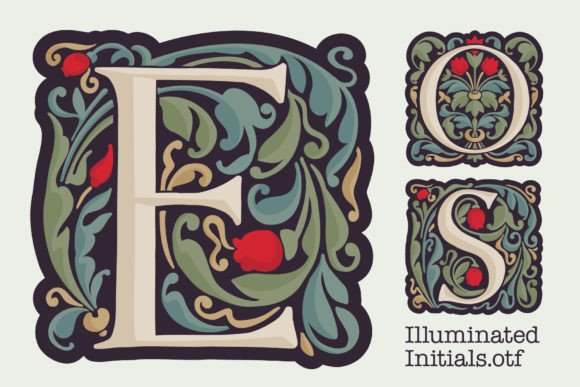
At first glance, Illuminated Initials is unapologetically bold. It is a gothic blackletter font that captures the essence of medieval manuscripts, but it does so with a structural integrity that makes it surprisingly versatile for contemporary use. The visual DNA of this typeface is built on angular, dramatic strokes that resemble the heavy, dark-aged style squares found in centuries-old texts. There is no softness here; there is only precision and power. The letterforms command attention immediately, creating a visual anchor that pulls the eye. For anyone involved in logo design or brand identity, this typeface offers a specific kind of authority that softer script font or handwritten font styles simply cannot achieve.
Decoding the Gothic Aesthetic
Understanding the visual characteristics of Illuminated Initials is key to using it effectively. Unlike the rounded, flowing nature of a serif font like Garamond, or the clean utility of Helvetica, blackletter typography is defined by its density. The "x-height" is typically high, and the contrast between thick and thin strokes is pronounced. However, what sets this specific display font apart is its treatment of the negative space. The interior counters of the letters are often squared off, giving the text a carved, almost architectural feel. It mimics the look of woodcuts or stone masonry, providing a texture that implies permanence and legacy.
When you look at the personality of Illuminated Initials, you are looking at a style that communicates heritage. It suggests that a brand or project has roots, that it values tradition, or that it possesses a certain mystique. This is particularly effective in editorial design. Imagine a magazine cover or a book jacket for a historical thriller or a fantasy novel. Using a standard bold sans serif might communicate "news," but using Illuminated Initials communicates "story." It sets a mood of intrigue and darkness before the reader has even processed the title. It is a font that doesn't just display words; it decorates them with a specific era's attitude.
Practical Applications: From Packaging to Web Design
While the medieval inspiration is strong, limiting Illuminated Initials to historical reenactments would be a mistake. In the realm of packaging design, this font shines when used for hierarchy. Think about craft beer labels, artisanal coffee bags, or boutique hot sauce branding. These industries thrive on authenticity and "small-batch" aesthetics. A heavy blackletter font signals that the product is handcrafted and robust. It provides a stark contrast against a minimalist background, ensuring the product name pops on a crowded shelf. It acts as a visual seal of quality.
In web design and social media graphics, the challenge is often breaking through the noise. A post on Instagram or a hero section on a landing page needs to stop the scroll. Illuminated Initials serves as an excellent tool for this "hook." Because it is a display font, it is not meant for body text, but for large, impactful headers. A single word set in this typeface can dominate a layout, providing a strong visual hierarchy that guides the user's eye down the page. For entrepreneurs and marketers, using this font for sale announcements or limited-time offers can create a sense of urgency and exclusivity. It feels "event-based," making the content feel special rather than routine.
Strategic Font Pairing
One of the most common pitfalls with high-impact fonts is poor pairing. Because Illuminated Initials has such a strong, angular personality, it requires a supporting cast that knows how to stay in the background. You rarely want to pair two loud voices together. A practical recommendation for designers is to balance the blackletter weight with a clean, geometric sans serif font. Fonts like Futura, Montserrat, or even a standard Arial can provide a clean, modern counterpoint to the medieval flair of the initials. This creates a dynamic tension: the Illuminated Initials provide the emotion and the brand mark, while the sans serif provides the clarity and information.
Alternatively, if you are aiming for a softer, more romantic aesthetic—perhaps for a wedding invitation or a luxury boutique—you might pair it with a delicate serif font with high contrast. However, avoid pairing it with another creative font that has high ornamentation, such as a complex script font. The result would likely be visual clutter, making the text illegible. The goal of a font pairing is to create a visual hierarchy where Illuminated Initials acts as the headline and the secondary font acts as the supporting information.
Technical Considerations and Licensing
Before integrating any design assets into a commercial workflow, practical evaluation is necessary. First, consider readability. Blackletter fonts can be difficult to decipher for those unfamiliar with the style, particularly when lowercase letters are involved. This is why Illuminated Initials is best used for short bursts of text: titles, headers, logos, or monograms. Avoid using it for long sentences or paragraphs, as the eye fatigue will set in quickly, negatively impacting user experience.
When testing the font, zoom out. Look at the silhouette of the word. Does it maintain its shape? With a font this bold, letters can sometimes merge visually at smaller sizes. Ensure that the spacing (kerning) is adjusted so that the letters breathe, even if they are touching stylistically. Furthermore, for professionals—whether you are a freelance designer or a small business owner—licensing is non-negotiable. Ensure you are acquiring a commercial font license that covers your specific usage, whether that is for a client's logo, a print-on-demand merchandise line, or a digital app. Using a premium font legally protects your work and supports the typographers who create these intricate modern typography tools.
Final Thoughts on Execution
Illuminated Initials is more than just a font; it is a stylistic statement. It offers a way to tap into the current trend of "dark academia" and vintage aesthetics while maintaining a professional edge. For content creators and bloggers, it can elevate a simple PDF lead magnet into a perceived high-value asset. For publishers, it can transform a standard book cover into a genre-defining piece of art.
The key to success with this typeface lies in restraint and context. Use it to evoke a specific emotion—mystery, history, strength, or elegance. When applied with a clear understanding of its visual weight and paired with a neutral, legible companion font, Illuminated Initials becomes a powerful weapon in your design arsenal. It reminds us that in a world of flat design, there is still room for depth, shadow, and the dramatic beauty of the past.