Blackpaper: A Modern Handwritten Script for Elegant Branding
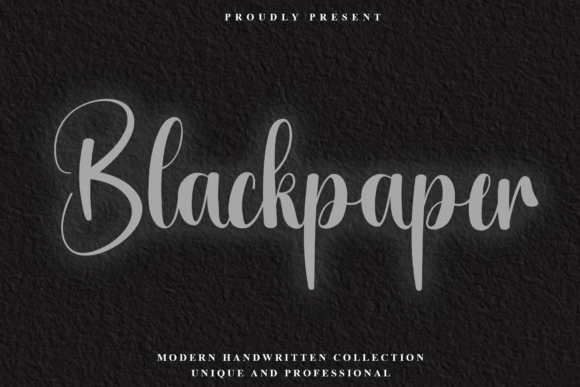
In a digital landscape saturated with geometric sans serifs and rigid serifs, a font that mimics the organic flow of human handwriting often cuts through the noise. Blackpaper is one such typeface. It is not merely a collection of letters; it is a visual representation of movement, offering a sophisticated alternative to standard corporate typography. As a modern handwritten script font, it captures the essence of a signature penned on premium stationery. The visual identity of Blackpaper is defined by its smooth, generous curves and elongated ascenders and descenders. Unlike casual or messy brush scripts that might feel playful or rough, Blackpaper maintains a strict level of elegance. The connections between letters are seamless, creating a rhythm that guides the eye naturally across the page. This premium font avoids the jagged edges often found in lower-quality scripts, ensuring that whether it is scaled up for a billboard or shrunk down for a label, the integrity of the line work remains intact.
The Anatomy of Elegance: Visual Characteristics
When we look at the technical execution of Blackpaper, we see a masterclass in balance. Handwritten fonts often struggle with consistency, but Blackpaper manages to feel authentically human while remaining highly readable. The letterforms feature variable stroke weights that mimic the pressure of a broad-tipped pen, adding depth and texture to the text. This characteristic makes it an incredibly versatile creative font. It does not scream for attention with wild loops or chaotic kerning; instead, it commands respect through subtlety. The typeface serves as a bridge between the formal and the personal. In the world of modern typography, finding a font that feels personal without sacrificing professionalism is rare. Blackpaper achieves this by avoiding the "wedding invitation" cliché. While it is certainly beautiful enough for luxury wedding stationery, its structure is firm enough to hold its own in editorial design and high-end packaging design. It brings a human touch to digital interfaces, softening the cold edges of technology and making brands feel more approachable.
Strategic Applications: Where Blackpaper Shines
Understanding where to deploy a script font like Blackpaper is just as important as the font itself. Because it is a display font, its primary strength lies in headlines, logos, and accents rather than long-form body copy. Here is how different creative professionals can leverage its strengths:
- Brand Identity and Logo Design: For brands that want to convey exclusivity, artistry, or a bespoke service, Blackpaper is a strong candidate for logo design. It suggests that the brand pays attention to detail and values craftsmanship. It works exceptionally well for lifestyle coaches, boutique agencies, and artisanal product makers.
- Digital Marketing and Web Design: In web design, Blackpaper can be used for hero text or section headers to break up the monotony of standard web-safe fonts. When used in social media graphics, the font catches the eye because of its distinct contrast to the platform's default UI, helping posts stand out in a crowded feed.
- Publishing and Editorial: Authors and publishers can use this creative font for book covers, chapter headings, or pull quotes in editorial design. It adds a narrative voice to the layout, suggesting intimacy or drama depending on the context.
- Commercial and Packaging: In the realm of packaging design, especially for cosmetics, perfumes, or gourmet foods, the font elevates the perceived value of the product. It signals luxury before the customer even reads the words.
Mastering Font Pairing and Hierarchy
One of the most common mistakes designers make with handwritten fonts is failing to pair them correctly. Because Blackpaper has such a strong personality, it requires a grounding partner. If you pair it with another decorative font, the result will be chaotic and unreadable. The golden rule for font pairing here is contrast. You want to balance the fluid, organic nature of the script with something structured and neutral.
An excellent pairing strategy involves using a clean sans serif font or a traditional serif font for your body text. For example, if you are designing a magazine layout, you might use Blackpaper for the main title and a crisp, geometric sans serif for the subheadings and body copy. This creates a clear visual hierarchy. The eye is immediately drawn to the expressive headline, and then settles comfortably into the readable body text. This approach ensures that your brand identity remains cohesive. The script provides the flair, while the supporting typeface provides the stability.
Practical Considerations for Implementation
Before integrating Blackpaper into your next project, there are a few practical design elements to consider to ensure maximum impact and legibility.
- Readability and Sizing: As a display font, Blackpaper is optimized for larger sizes. Avoid using it for paragraphs of text or small captions, as the intricate details of the swashes may become muddy or difficult to read at low resolutions. Test your designs at the intended output size, whether it is a mobile screen or a printed banner.
- Color and Contrast: Because the strokes of the font are elegant and somewhat thin in areas, high contrast is essential. Avoid placing Blackpaper over busy photographic backgrounds without a solid color overlay or a text box. Ensure the color of the text stands out sharply against the background to maintain the sophisticated look.
- Licensing and Usage: If you are a small business owner or entrepreneur, always verify the commercial font licensing. A personal license covers your own projects, but if you are creating design assets for clients or selling merchandise (like T-shirts or mugs) with the font on it, you will typically need an extended commercial license. This is a standard part of professional web design and graphic design workflows.
- Alternates and Ligatures: High-quality fonts like Blackpaper often come with stylistic alternates and ligatures. Explore the font panel in your design software (such as Adobe Illustrator or Photoshop) to see different versions of specific letters. Swapping out a standard "t" or "h" for a stylistic alternate can make your typography look custom-lettered rather than typed out.
Elevating the User Experience
Ultimately, the goal of using a typeface like Blackpaper is to influence how an audience feels about a brand or product. Typography is a silent ambassador. When a user visits a website and sees a premium font used effectively, they subconsciously register the brand as more established and trustworthy. This is the power of modern typography. It is not just about aesthetics; it is about psychology. By choosing a handwritten font that flows with grace rather than chaos, you are telling your audience that you value quality and elegance. Whether you are a blogger looking to upgrade your site's header, a crafter designing a digital download, or a marketer creating a luxury campaign, Blackpaper offers the tools to transform standard text into a memorable visual experience. It proves that in a world of automation, the human touch—simulated through expert design—still holds the highest value.