Exploring Adventure: A Typeface for the Trailblazer
When you're building a brand that speaks to the outdoors, the rugged, or the timeless, your typography has to do more than just sit there. It needs to feel like it belongs on a weathered trail sign or a vintage national park poster. That's the specific, tangible space where a font like Exploring Adventure lives. It's not just a collection of letters; it's a design tool engineered to inject a specific, powerful personality into your work. This isn't about generic "vintage" filters—it's about a deliberate aesthetic choice that communicates strength, heritage, and a hands-on spirit.
More Than Just a Pretty Font: The Practical Anatomy of Exploring Adventure
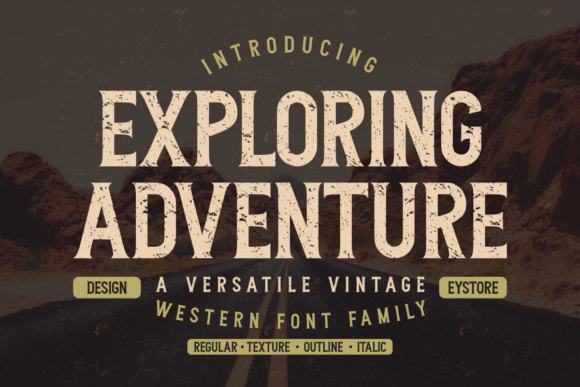
At its core, Exploring Adventure is a premium font family designed as a display font. This means it's crafted for impact at larger sizes—think headlines, logos, and hero sections—rather than for long blocks of body text. Its visual character is unmistakable: bold, condensed letterforms with a slightly uneven baseline and subtle distressed textures that mimic the look of letterpress printing or hand-painted signage. This gives it an authentic, handcrafted feel that avoids looking digitally sterile.
The family includes four essential styles—Regular, Texture, Outline, and Italic—which is a practical toolkit, not just decorative extras. The Texture style is particularly valuable, offering that pre-distressed, gritty look that saves you from having to add effects later. The Outline style provides a lighter, more graphic option that works beautifully for layering or creating contrast. This versatility means you can maintain a consistent brand voice across different applications, from a bold primary logo to supporting social media graphics, without switching to a completely different typeface.
Where This Font Truly Shines: Real-World Applications
So, where should you actually use Exploring Adventure? Its personality is a perfect match for projects that need to evoke authenticity, nostalgia, and a sense of journey.
- Branding & Logo Design: This is its sweet spot. For businesses in the outdoor, craft, travel, or artisanal space, this font can become the cornerstone of a memorable brand identity. Imagine it on a logo for a hiking gear company, a craft brewery, or a local coffee roaster. It immediately tells a story of quality and character.
- Packaging & Labels: The distressed details hold up incredibly well in print, adding a tactile, premium quality to packaging design. Think hot sauce labels, specialty food products, or cosmetic packaging that wants a rustic, apothecary vibe.
- Editorial & Publishing: Use it for chapter titles in a travel memoir, cover art for a magazine about van life, or pull quotes in a blog post about national parks. It adds a dramatic, thematic punch that a standard serif font or sans serif font simply can't provide.
- Digital & Social Media: It translates surprisingly well to screen use for large headings in web design and is a powerhouse for social media graphics. It makes Instagram posts, Pinterest pins, and YouTube thumbnails instantly recognizable and scroll-stopping.
Making It Work: Practical Guidance for Designers and Creators
Choosing a creative font is only half the battle; using it effectively is what separates good design from great design. Here’s how to approach Exploring Adventure with a strategist's mindset.
Evaluate the Fit
First, be honest about your project's tone. Does it call for ruggedness, heritage, and adventure? If your brand is sleek, minimalist, or corporate, this font will clash. It's a specialist, not a generalist. Its strength is its strong personality, which is a weakness if misapplied.
Master the Pairing
This is critical. A display font like this needs a partner. For body text or supporting information, pair it with a clean, highly readable serif font or sans serif font. A good pairing might be a geometric sans serif for modern contrast or a classic serif for a more unified, traditional feel. Avoid pairing it with other decorative fonts like a script font or handwritten font, as that will create visual chaos.
Test for Readability
Remember, it's a display font. Use it for short, impactful text: headlines, single words, or brief phrases. Set your body copy in something designed for legibility at small sizes. Test its readability at the specific size you plan to use it, especially on mobile devices. The Outline style, while beautiful, can become difficult to read if used too small or against a busy background.
Leverage the Styles
Don't just default to the Regular style. Use the Texture style for projects where a distressed look is key. Use the Outline style for secondary information or to create a layered effect with the filled version. The Italic can add a dynamic, urgent feel to a call-to-action. Using these styles intentionally shows design sophistication.
Understand the License
Before you commit, confirm the commercial font license fits your needs. Check the terms for the number of users, permitted uses (like web fonts via @font-face), and any restrictions on merchandise or print-on-demand. This is a standard but crucial step for any professional design asset.
Ultimately, Exploring Adventure is a powerful tool for a specific job. When your project's narrative aligns with its visual language—when you need to convey the spirit of the open road, the reliability of a well-worn tool, or the excitement of discovery—it can elevate your design from simply looking good to feeling genuinely authentic. It’s a typeface that doesn’t just display words; it helps tell a story.