Greek Odyssey Font: Marrying Classical Sophistication with Modern Design
There's a particular quality in some typefaces that stops you mid-scroll. It's not just about being decorative—it's about carrying weight, history, and a sense of authority that commands attention without shouting. The Greek Odyssey font does exactly that, drawing its visual DNA from Roman Greek inscriptions and the clean geometry of classical architecture. Think of the precise lines on a Corinthian column or the measured proportions of a marble statue. This typeface translates that same clarity and assertiveness into every letterform, offering designers a tool that feels both timeless and remarkably versatile.
What makes Greek Odyssey stand apart in a crowded market of premium fonts is its personality. It doesn't mimic antiquity with rough, weathered textures. Instead, it takes the structural principles of classical lettering—strong verticals, balanced curves, deliberate spacing—and refines them into something that works seamlessly in contemporary contexts. The result is a display font that reads as sophisticated without feeling stuffy, historic without being nostalgic. It occupies a rare space where classicism meets clean modern typography, making it a genuinely useful addition to any designer's toolkit.
Where This Typeface Truly Shines
Understanding where Greek Odyssey works best starts with recognizing its strengths. This is a font built for projects that need to communicate authority, elegance, or a sense of enduring quality. It's not trying to be a workhorse body font—there are plenty of excellent serif fonts and sans serif fonts for that role. Instead, think of Greek Odyssey as your go-to for headlines, branding marks, and display applications where first impressions carry significant weight.
In logo design, Greek Odyssey offers a distinct advantage. Brands that want to project heritage, luxury, or craftsmanship—think boutique hotels, artisan food brands, high-end fashion lines, or architectural firms—find that this typeface communicates those values immediately. A law firm's letterhead, a winery's label, a jewelry brand's packaging design—these are contexts where the font's classical roots reinforce the brand identity without needing additional explanation. The letterforms do the talking.
Editorial design is another natural fit. Magazine covers, book titles, and feature article headers benefit enormously from a typeface that balances visual impact with readability. Greek Odyssey's carefully crafted characters maintain legibility even at larger display sizes where some decorative fonts fall apart. Publishers working on historical fiction, travel writing, or lifestyle content will find it pairs beautifully with more neutral body text, creating a visual hierarchy that guides the reader's eye naturally.
For wedding invitations and event stationery, the font brings a romantic gravitas that script fonts sometimes struggle to achieve. Where a handwritten font might feel casual or a modern sans serif might feel too corporate, Greek Odyssey occupies that sweet spot of formality with warmth. It works across save-the-dates, menus, programs, and signage, maintaining consistency throughout an entire event suite.
Digital applications deserve attention too. Social media graphics, website headers, and presentation slides all benefit from a typeface that renders crisply on screens. Greek Odyssey's geometric foundations mean it holds up well in digital environments, avoiding the muddiness that some serif fonts suffer at smaller pixel sizes. Marketers creating branded content for Instagram, Pinterest, or LinkedIn will appreciate how the font elevates a simple quote graphic or announcement into something that feels considered and professional.
Making Smart Design Decisions with Greek Odyssey
Choosing the right font for a project involves more than personal taste—it requires evaluating whether the typeface aligns with your message, audience, and medium. Greek Odyssey makes this evaluation straightforward because its personality is so clearly defined. If your project needs to convey modern minimalism or playful energy, this probably isn't the right choice. But if you're aiming for sophistication, tradition, or a sense of established credibility, it's worth serious consideration.
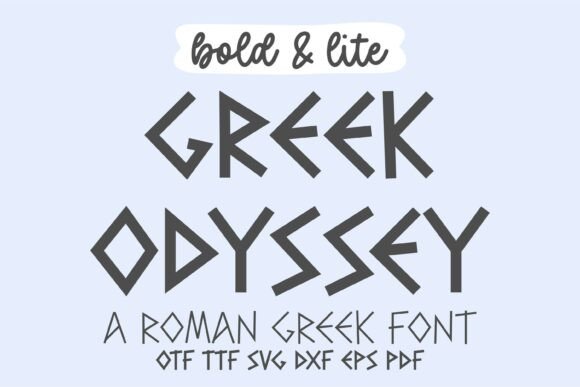
The availability of both Bold and Lite styles gives you practical flexibility. The Bold weight delivers maximum impact for primary headlines, hero text, and branding marks where you need to make an immediate statement. The Lite weight offers a more restrained elegance, working well for subheadings, pull quotes, or applications where you want the font's character without overwhelming the composition. Having both styles means you can build entire typographic systems around a single typeface family, maintaining visual consistency across complex projects.
Font pairing is where many designers either elevate or undermine their work. Greek Odyssey pairs most naturally with clean, understated companions. A simple sans serif font for body text creates a pleasing contrast—the classical display font handles the visual heavy lifting while the body copy stays unobtrusive and readable. Avoid pairing it with other highly decorative or script fonts, which creates visual competition. The goal is complementary contrast, not a typographic tug-of-war.
Readability considerations matter more than many people realize. Greek Odyssey's designers clearly prioritized legibility alongside aesthetics, which isn't always the case with display fonts. The characters maintain clear distinction from one another—no confusing "I," "l," and "1" situations—and the spacing supports comfortable reading at appropriate sizes. That said, like any display typeface, it's best used for headlines and short text passages rather than extended paragraphs. Respect the font's intended purpose and it will serve you well.
Practical workflow considerations also matter. Greek Odyssey ships in multiple formats—OTF, TTF, SVG, DXF, EPS, and PDF—which means it integrates smoothly into virtually any creative environment. Whether you're designing in Photoshop, Illustrator, Canva, Procreate, or cutting files with Cricut and Silhouette, the font files are ready to work. This kind of compatibility eliminates friction from your creative process and ensures the same design asset performs consistently whether you're producing print materials or digital content.
For commercial use, always verify the licensing terms before deploying Greek Odyssey in client work, products for sale, or large-scale distribution. Most premium fonts include clear commercial licenses, but the specifics vary. Understanding whether the license covers web embedding, app usage, or merchandise production protects both you and your clients. It's a small administrative step that prevents significant headaches later.
Building Lasting Visual Impact
The real value of a typeface like Greek Odyssey extends beyond individual projects. When used consistently across a brand's touchpoints—from business cards to website design to social media graphics—it becomes a recognizable element of visual identity. Audiences begin associating the font's classical elegance with the brand's values, creating an unconscious but powerful connection. That's the kind of recognition that no amount of trendy design can replicate.
For creative professionals evaluating their font libraries, Greek Odyssey fills a specific and valuable niche. It won't replace your primary body fonts or your casual display options, but it addresses a design need that many typefaces attempt and few execute this well: the ability to evoke classical authority with contemporary polish. Whether you're a freelance designer building brand identities, a small business owner creating marketing materials, or a crafter producing handmade goods with professional presentation, this typeface earns its place among your design assets through consistent, reliable performance across diverse applications.