Star Mode: Capturing Mid-Century Modern Magic
There’s a specific feeling you get when you see a vintage movie marquee or a diner sign from the 1950s. It’s a blend of optimism, atomic age geometry, and bold confidence. In the world of design, capturing that specific energy requires more than just a filter; it requires the right typography. This is where Star Mode steps in. It isn’t just a typeface; it’s a time machine. As an emblematic Mid-Century Style Retro font, it carries the distinct charm of an era defined by space exploration, rock 'n' roll, and sleek visual design.
If you are a designer, entrepreneur, or content creator looking to inject personality into your work, understanding how to harness the power of a premium font like Star Mode is essential. It offers visual impact that modern, sterile sans-serifs often lack, providing a nostalgic anchor for your brand identity.
The Anatomy of Nostalgia: Visual Characteristics of Star Mode
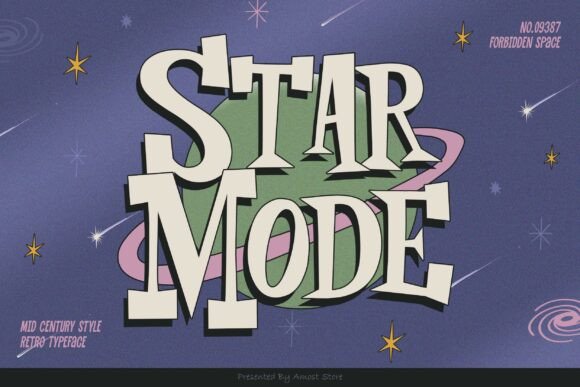
To truly appreciate a creative font, you have to look at its anatomy. Star Mode is distinctly a display font, meaning it was built to be seen, not to be hidden in a paragraph of body copy. Its visual personality is defined by the hallmarks of Mid-Century design: strong geometric foundations, confident curves, and a playful yet structured stance.
Unlike a standard sans serif font that might prioritize neutrality, Star Mode prioritizes atmosphere. You will likely notice subtle nods to the era—perhaps softened corners that mimic hand-painted signage or sharp terminals that suggest the precision of 1960s engineering. It feels familiar because it draws on the visual language of vintage postcards, retro packaging, and classic cinema titles. It has a warmth that digital text often lacks, making it an instant attention-grabber.
For the modern creator, this typeface serves as a bridge. It connects the tactile history of print with the crisp requirements of digital screens. Whether viewed on a high-resolution retina display or printed on textured cardstock, Star Mode maintains its structural integrity while retaining its retro soul.
Practical Applications: Where Star Mode Shines
Knowing a font looks good is one thing; knowing where to use it is the key to professional brand identity. Because Star Mode is a display font, its strengths lie in high-visibility scenarios. Here is how different professionals can leverage its style:
Branding and Logo Design
For businesses looking to evoke a sense of heritage, authenticity, or "cool," Star Mode is a powerhouse for logo design. It works exceptionally well for:
- Food and Beverage: Think craft breweries, burger joints, or artisanal coffee roasters. The font signals quality and a specific vibe before the customer even reads the menu.
- Fashion and Lifestyle: Vintage clothing stores or barbershops can use Star Mode to establish a strong, thematic identity that stands out in a crowded market.
- Entertainment: Podcast logos, YouTube channel headers, or event posters for music festivals benefit from the high-energy aesthetic.
Packaging and Editorial Design
In packaging design, shelf appeal is everything. Star Mode can turn a generic product into a collector's item. Imagine this font on a label for a hot sauce or a soda bottle; it immediately communicates a legacy of taste. Similarly, in editorial design, such as magazine headers or book covers, it commands attention. It sets the tone for the content inside, promising the reader an engaging experience.
Digital and Web Design
While it shouldn't be used for long blocks of website text, Star Mode is excellent for web design hero sections, call-to-action buttons, and section headers. It breaks the monotony of standard web fonts. Furthermore, it is a game-changer for social media graphics. On platforms like Instagram or TikTok, where you have a split second to stop the scroll, the distinct silhouette of Star Mode can halt the thumb and drive engagement.
The Art of the Pair: Font Pairing and Hierarchy
One of the most practical aspects of using a retro font is understanding how it interacts with other typefaces. Star Mode is bold and expressive, which means it demands a partner that knows how to share the stage. You generally don’t want to pair a loud display font with another loud font; the result is visual noise.
Instead, focus on contrast. A classic font pairing strategy is to combine Star Mode with a clean, readable sans serif font or a classic script font.
- For a Modern Contrast: Use Star Mode for your headlines and pair it with a geometric sans-serif like Montserrat or Lato for body copy. The clean lines of the sans-serif allow Star Mode’s personality to pop without overwhelming the reader.
- For a Cohesive Retro Vibe: Star Mode blends seamlessly with many script fonts. If you have a handwritten font that feels organic, using Star Mode for the main title and the script for a sub-tagline can create a logo that feels authentic and handcrafted.
This approach to visual hierarchy ensures your message is clear. The display font grabs attention (Star Mode), and the supporting font delivers the detailed information (your body copy).
Technical Considerations and Licensing
Before you finalize a design, you need to evaluate the technical side of your design assets. As a commercial font, Star Mode comes with specific features and licensing requirements that you must review.
Styles and Glyphs
Check the font file for included styles. Does it have a bold or italic variation? Does it include stylistic alternates or ligatures? High-quality fonts often include these extras, allowing you to customize the look of specific letters to better fit your logo design or layout. Experimenting with these built-in variations can give your work a bespoke feel.
Readability vs. Legibility
Because Star Mode is a stylized retro font, you must test it at the size you intend to use it. It may look perfect as a 72pt header, but at 12pt, some of the decorative elements might become muddy. Always print out a test page or view it on a mobile device to ensure the text remains legible. Good design is functional; if people can't read the word "SALE" or your brand name, the font choice has failed, regardless of how beautiful it is.
Licensing
For entrepreneurs and small business owners, licensing is non-negotiable. Ensure the license covers your specific usage. If you are putting the font on a t-shirt to sell (print-on-demand), you typically need a commercial license that covers merchandise. If you are using it strictly for client logos or internal documents, a standard desktop license is usually sufficient. Always read the EULA (End User License Agreement) to protect your business legally.
Elevating Your Creative Projects
Typography is the voice of your design. While content creates the story, the typeface sets the mood. Star Mode offers a voice that is confident, nostalgic, and undeniably stylish. It allows content creators, marketers, and crafters to tap into the enduring appeal of the Mid-Century era.
By using Star Mode thoughtfully—respecting its display nature, pairing it with complementary fonts, and applying it to the right projects—you can elevate your work from standard to standout. It’s more than just a premium font; it’s a tool for storytelling. Whether you are designing a wedding invitation, a startup logo, or a social media campaign, let Star Mode transport your audience to a time when design was bold, fun, and full of character.